Dr. Gymbro
←

#sports supplements

12 articles
supplements

Ketone‑ester na training verdubbelde VO2‑peak‑winst bij wielrenners

BY DR. GYMBRO ·

Een ketone‑mono‑esterdrank, ingenomen direct na de training en voor het slapengaan, leverde bij getrainde wielrenners een ongeveer 4 % hoger vermogen in een 30‑minuten‑tijdrit en verdubbelde de VO₂‑peak‑stijging ten opzichte van placebo. Spieranalyse toonde een 14 % hogere citraat‑synthase‑activiteit en een 25 % toename van OXPHOS‑complex II, terwijl hartaanpassingen onveranderd bleven. Het onderzoek van KU Leuven betrof slechts 28 mannelijke deelnemers en de supplementen zijn prijzig, dus de resultaten zijn veelbelovend maar nog niet doorslaggevend. Hier lees je wat de studie precies aantoonde en wat het betekent voor jouw trainingsplan.
A quiet, sunlit editorial still life on a pale oatmeal linen surface, shot from a slightly elevated three-quarter angle with soft morning window light raking in from the left. On the left side, a small matte ceramic dish holds a few white round tablets, next to a minimalist amber glass bottle with a blank cream label. In the center, a slim glass of water sits beside a handmade stoneware espresso cup filled with dark coffee, with a thin ribbon of steam curling upward. On the right, a pair of worn but clean sage-green running shoes rests on a pale wooden bench, with a folded charcoal athletic towel and a stainless steel stopwatch beside them. The background is softly blurred: a calm bedroom-to-morning transition, with the left third of the frame in cool, dusky blue-gray tones suggesting night, with rumpled white bedding and a small bedside lamp glowing dimly. The tones then blend gradually across the frame into warm golden peach morning light on the right, where a blurred indoor court or track line is faintly visible through a tall window. The color palette is muted and modern: warm cream, soft sage, dusty blue, terracotta accents, and hints of amber. Delicate shadows, shallow depth of field, fine natural film grain, and generous negative space across the top of the frame for headline text. The mood is calm, precise, and thoughtful, in the style of a contemporary wellness and science journal photograph, clean and minimalist with tactile textures of linen, ceramic, glass, and wood.
nutrition

Melatonine en cafeïne: Alleen de combinatie verlaagt spierbeschadigingsmarkers

BY DR. GYMBRO ·

Cafeïne zorgde ervoor dat getrainde mannen verder renden in een shuttle‑test, maar alleen de melatonine‑plus‑cafeïne‑combinatie verlaagde tevens de markers voor spierbeschadiging en ontsteking. Het protocol bestond uit 6 mg melatonine voor het slapengaan en 3 mg/kg cafeïne een uur voor de test. Melatonine had geen meetbare invloed op de slaap, wat de bevindingen extra intrigerend maakt. De studie was klein (14 deelnemers) en gebruikte één prestatie‑test, dus de resultaten moeten voorlopig als voorlopig worden beschouwd.
A landscape editorial photograph with a clean, modern magazine feel. On a pale concrete bench in a softly lit locker room, a single small glass shot of deep magenta-red beetroot juice sits in the left third of the frame. It is slightly out of focus in the foreground, with condensation beading on the glass and a faint ruby glow cast on the surface beneath it. Behind it, in crisp focus, is a neat row of seven identical small glass bottles of the same vivid juice, lined up like a weekly calendar. The bottles suggest multi-day loading, and the last one is subtly set apart from the others, with a simple analog wall clock blurred in the background.

Around the bottles are a few styled props: a halved raw beetroot showing concentric pink and crimson rings, a few small green-stemmed beet leaves, and a folded charcoal athletic towel. A pair of worn white and gray football cleats rests at the edge of the frame, with a hint of turf on the soles. A mesh-fabric team jersey in muted navy hangs on a wooden locker door in the soft background.

The lighting is natural window light from the right, with soft diffused shadows, warm highlights, and a gentle morning feel. The color palette is restrained and contemporary: deep beet magenta, warm off-white, slate gray, light oak, and touches of fresh leaf green. The composition has generous negative space on the right side, where the light falls across the empty bench, so there is room for a headline overlay. Shallow depth of field, a 35mm lens look, fine film-like grain, and a minimalist, high-end lifestyle-journal aesthetic. No people's faces, no text, no futuristic elements.
nutrition

Bietensap voor teamsporten: Waarom één pre‑wedstrijdshot niet werkt

BY DR. GYMBRO ·

Dat rode shot in de kleedkamer levert misschien niet wat je ervan verwacht. Een nieuwe meta‑analyse van 24 studies bij teamsporters toont aan dat bietensap en dieet‑nitraten kleine maar echte voordelen bieden, vooral bij teamsport‑specifieke taken (g = 0.143, matige zekerheid). De best onderbouwde aanpak is een meerdaagse inlaadperiode met een laatste dosis 2‑3 uur voor de training, terwijl een enkele pre‑wedstrijddosis geen duidelijk effect liet zien. Enkel‑sprints, de meeste metabole markers en cardiorespiratoire reacties verbeterden niet, en er bleek geen eenduidig dose‑responspatroon. Hier lees je wie het zou moeten proberen, wie het moet laten staan en waarom het chronisch‑vs‑acuut verhaal minder robuust is dan het lijkt.
A wide, editorial-style photograph of a clear glass of water on a weathered concrete ledge at the edge of an outdoor running track, shot in soft golden-hour light. Tiny, fine bubbles cling to the inside of the glass and drift upward, catching warm backlight so the water looks luminous and crisp. The glass is about three-quarters full, with delicate condensation beading on its surface. In the softly blurred background, the curved lanes of a terracotta-red track sweep diagonally across the frame, with faint white lane lines leading toward the horizon. A lone sprinter in a charcoal athletic top crouches in a starting position, out of focus, rendered as a muted silhouette. Long shadows stretch across the track, and a hazy line of trees glows amber in the distance.

Foreground details are sharp: a matte black sports watch rests beside the glass, its screen dark, and a folded white towel sits at the edge of the frame. The palette is warm and restrained, with terracotta, sand, soft peach sky, charcoal, and the cool, clean glint of water as the focal accent. Shallow depth of field, 85mm lens look, fine film grain, gentle natural lens flare from the low sun. The composition follows the rule of thirds, with the glass placed on the left third and generous negative space on the right for headline text. The mood is calm, athletic, and modern, like a contemporary health and performance magazine cover, with no text, logos, or futuristic elements.
science research

Waterstofrijk water vóór sprints: vermogen blijft hoger en herstel versneld

BY DR. GYMBRO ·

Een glas van 280 mL waterstofrijk water, ingenomen ongeveer een minuut vóór een all‑out sprint, hield de vermogensoutput hoger in een nieuwe crossover‑studie. Atleten vertoonden bovendien een sneller herstel van de hartslagvariabiliteit en hun bloedlactaat was ongeveer 1 mmol/L lager drie minuten na de inspanning. De studie omvatte echter slechts 13 mannen, was enkelblind en onderzocht alleen één acute dosis.
A wide, editorial-style photograph of a marathon runner seen from behind and slightly to the side, mid-stride on a quiet tree-lined road at early morning golden hour. The runner wears a fitted sage-green technical shirt and charcoal shorts, with a plain unnumbered bib pinned at the back. Soft sunlight filters through the leaves and creates long, gentle shadows and a warm amber glow on the asphalt. Behind the runner, other runners blur into a soft bokeh background of muted greens and warm light.

In the lower right foreground, slightly out of focus, a small ceramic dish on a weathered light-oak surface holds two golden, translucent softgel capsules. Beside it sits a simple glass of water with sunlight refracting through it, casting a tiny warm caustic on the wood. A sprig of green leaves adds a natural touch. The foreground and the runner are separated by a shallow depth of field, which suggests the link between supplementation and endurance without being literal.

The palette is warm and natural: soft yellows, sunlit gold, sage green, cream, and light wood tones. The mood is calm, health-focused, and contemporary, like a modern wellness or science journal feature. The composition uses generous negative space in the upper left sky area for title text overlay. The lighting is natural and soft with a subtle film-like grain, and the image is clean, minimal, and crisp. There are no text overlays, logos, or medical clichés such as hearts or graphs, and no futuristic elements.
science research

Hardlopers die vitamine D3 innamen, hadden lagere hart‑stressmarkers na 42 km

BY DR. GYMBRO ·

Marathonlopers die acht weken vitamine D3 innamen, hadden 24 uur na de 42,195 km‑race lagere CK‑ en CK‑MB‑waarden dan de placebogroep. Ook de toename van eiwit‑carbonylen, een marker voor oxidatieve schade, was kleiner in de vitamine‑D‑groep. De studie was echter klein (n=21), single‑blind, en slechts enkele biomarkers vertoonden significante verschillen. De immunologische effecten waren louter beschrijvend, en CK‑MB is een stress‑biomarker, geen bewijs van hartschade. Hieronder vind je wat de studie aantoonde, voor wie het kan helpen en voor wie je beter kunt passen.
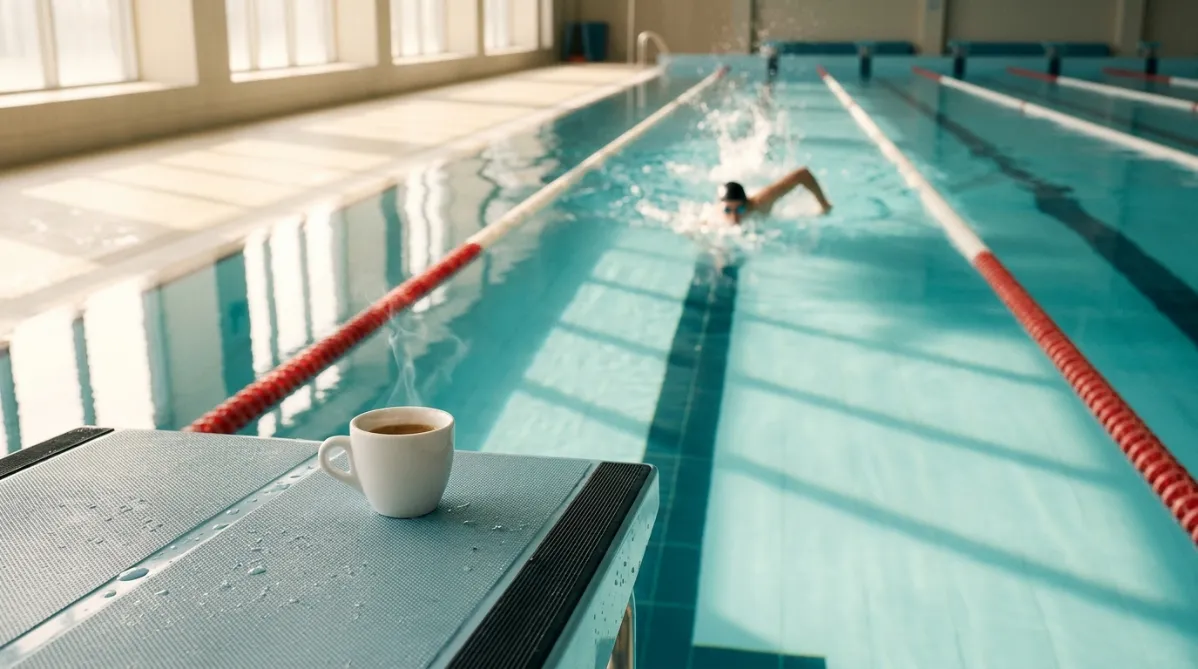
A wide, editorial-style photograph of a competition swimming pool lane seen from just above the water line at the starting end, in soft morning light. In the foreground, on the pool deck, a white ceramic espresso cup sits on the edge of a blue-gray starting block, a thin curl of steam rising from it. The cup is in crisp focus, with a few droplets of water on the textured non-slip deck around it. Behind it, the pool stretches into the distance as a series of calm lanes divided by red and white lane ropes. The turquoise water glints with gentle ripples and long, shimmering reflections. At the far end, a lone swimmer in a dark cap and goggles is mid-stroke, caught in a small burst of white splash, and slightly out of focus because of the shallow depth of field.

Large windows along the side wall let in pale golden sunlight, which throws soft diagonal light across the water and the deck. The palette is clean and modern: aqua, deep teal, warm cream and a small accent of coffee brown. The cup's warm tones stand out against the cool blues. The composition follows the rule of thirds, with the cup in the lower left third and open negative space of water and light on the right, leaving room for headline text. The look is minimal, airy and contemporary, like a high-end sports and science magazine, with subtle film grain, natural color grading, and a slightly desaturated, calm mood. Faint stopwatch-like details appear only as a thin black timing pad edge on the starting block, with no text or numbers visible. The overall feel is quiet anticipation just before a race, precise and fresh, with a sense of small margins and measured performance.
nutrition

Cafeïne maakt zwemmers sneller, maar minder dan je zou denken

BY DR. GYMBRO ·

Zwemmers drinken al jarenlang koffie vóór een wedstrijd, maar werkt het echt? Een nieuwe multilevel meta‑analyse van 13 crossover‑studies laat een winst van ongeveer 1,7 % zien – een relevant verschil in een sport waar honderdsten van een seconde tellen. Het verrassende detail: het duidelijkste effect bleek bij een dosering van 6 mg/kg of meer, terwijl lagere doses geen overtuigend effect lieten zien. Cafeïne verhoogde ook de bloedlactaat na de race, en de resultaten varieerden sterk tussen de onderzoeken. Hieronder wat de cijfers wel en niet ondersteunen.
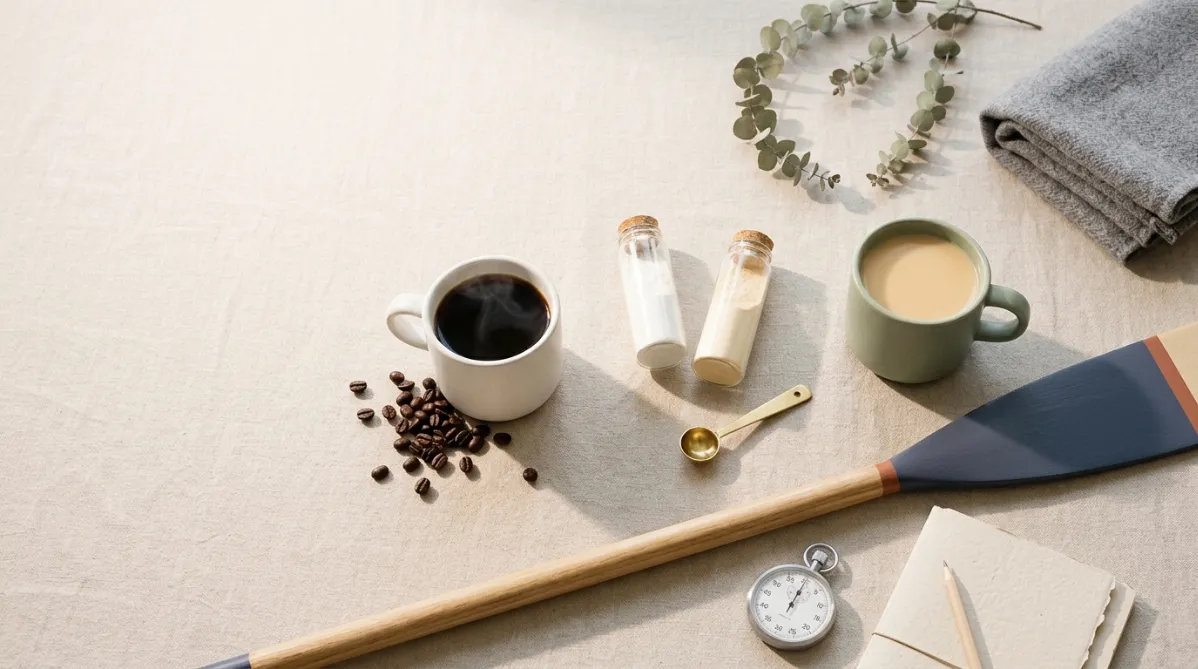
A wide, editorial-style flat lay photographed from above on a pale oat-colored linen surface in soft morning window light. On the left, a small matte white ceramic cup of black coffee with a delicate swirl of steam, beside a few scattered roasted coffee beans. On the right, a second matte sage-green ceramic cup holding a pale, creamy golden tea-like drink, mirroring the first. Between them, two small glass vials with cork stoppers sit side by side: one holding fine white powder, the other holding slightly warmer cream-colored powder, with a tiny brass measuring spoon resting nearby. In the lower foreground, a slim wooden rowing oar lies diagonally across the frame, its blade edge softly entering from the right, painted a muted navy with a thin terracotta stripe. A minimalist analog stopwatch with a brushed-steel case rests near the oar, and a folded cream notebook with a thin pencil suggests data-taking. In the upper corner, a crescent-shaped dried eucalyptus sprig and a small folded gray wool throw hint at sleep and calm without being literal. The palette is warm and restrained: oat, cream, sage, soft navy, terracotta, and espresso brown. Shadows are long and gentle, with shallow depth of field and subtle film grain, giving a refined, modern wellness-magazine feel. Generous negative space on the left third of the composition leaves room for a headline overlay. Clean, calm, tactile, and contemporary, with no text, logos, or futuristic elements.
science research

Paraxanthine vs cafeïne: de combinatie die won en de slaapbeschermer

BY DR. GYMBRO ·

Paraxanthine, de belangrijkste metaboliet van cafeïne, ging recentelijk de strijd aan met cafeïne in een proef met 14 roeiers. Een combinatie van 200 mg van elk versloeg placebo op een 2000‑m roeitocht, zij het met een klein effect (d = 0,30). Geen van beide stoffen toonde afzonderlijk een duidelijke prestatie‑winst. Paraxanthine alleen leek echter vriendelijker voor de subjectieve slaap. Hier staan de cijfers, de beperkingen en wie er daadwerkelijk van kan profiteren.
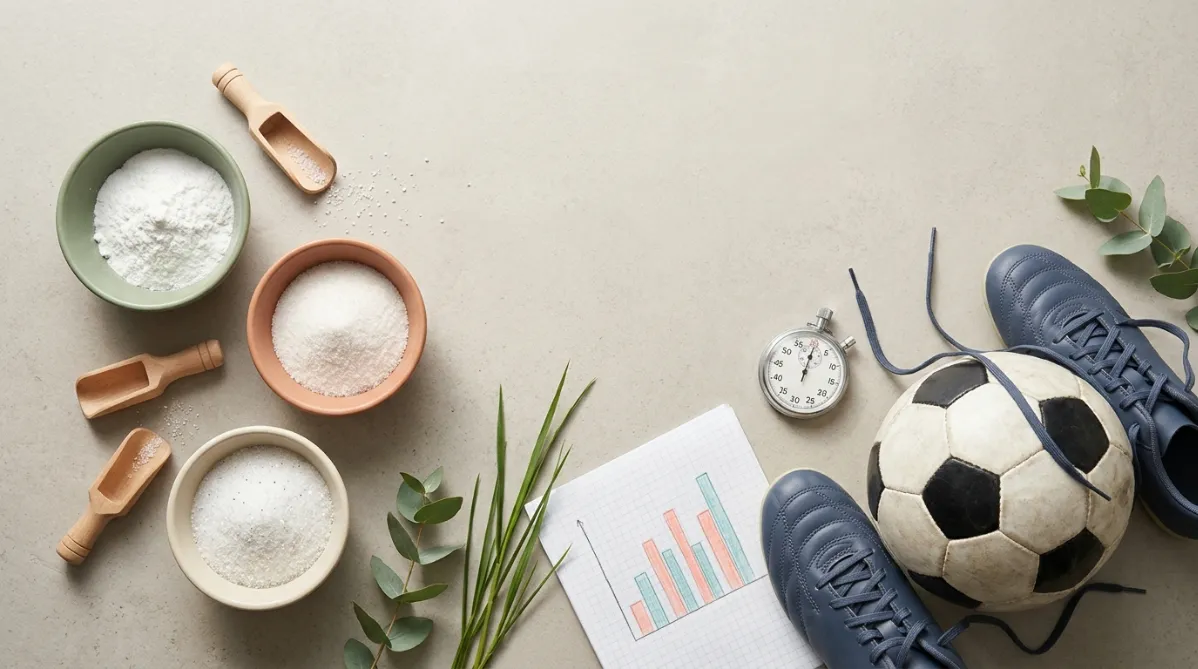
A wide, editorial-style flat lay photographed from above on a pale warm-gray concrete surface, lit by soft natural window light with gentle shadows. On the left, three small matte ceramic bowls in sage green, soft terracotta, and cream, each holding a different white crystalline powder. The textures vary subtly: fine and powdery, slightly granular, and glittery with tiny crystalline flecks. Beside them rest three minimalist wooden scoops, a few scattered grains catching the light. In the center-right, a worn classic black-and-white soccer ball sits slightly off-frame, partially cropped by the edge, with a pair of muted navy cleats resting nearby, laces loosely draped. A small stopwatch with a brushed-steel finish and a folded sheet of graph paper with a hand-drawn bar chart in soft coral and teal pencil add a subtle sense of data and measurement. A few blades of fresh-cut grass and a sprig of eucalyptus add organic accents. The palette is calm and modern: warm neutrals, sage, terracotta, and muted navy, with one pop of coral. The composition leaves generous negative space in the upper right for headline text. The mood is clean, curious, and trustworthy, like a contemporary health and science journal. Shallow depth of field, crisp focus on the powders, with the soccer elements slightly softer. High-end editorial photography, 16:9 landscape.
science research

Creatine HCl Verslaat Monohydraat bij Voetballers – Gooi je eigen creatine nog niet weg

BY DR. GYMBRO ·

Een nieuwe gerandomiseerde proef met 40 voetballers toonde aan dat creatine‑HCl en creatine‑ethyl‑ester betere resultaten leverden dan gewone monohydraat op springen, sprinten, wendbaarheid en piekvermogen na slechts vier weken. Elke creatine‑vorm overtrof het placebo, maar de ‘chique’ varianten gingen nog een stapje verder bij de explosieve metingen. Voordat je van product wisselt, moet je wel weten dat de studie slechts tien sporters per groep had, dat de doseringen niet in het abstract staan en dat de bevindingen botsen met eerdere onderzoeken. Hieronder lees je wat de studie wel en niet liet zien en hoe je de resultaten moet interpreteren.
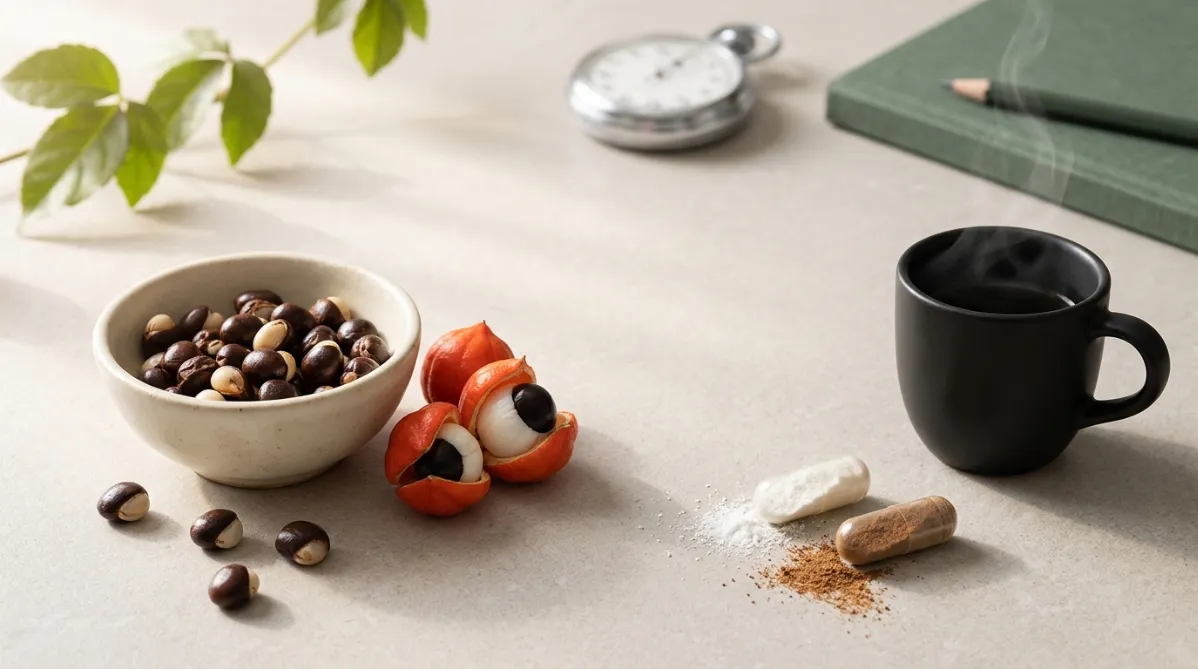
A wide, softly lit editorial flat-lay on a pale warm-gray stone countertop, shot from slightly above. On the left, a small rustic ceramic bowl in matte cream holds a handful of dried guarana seeds, dark glossy brown with pale cream arils, a few spilling onto the surface. Beside it sits a halved fresh guarana fruit in vivid red-orange, split open to show the white flesh and black seed inside, looking like a tiny eye. On the right, two open clear capsules rest side by side. One is filled with fine white caffeine powder, the other with a fine earthy brown guarana powder, and a little of each dusts the stone in delicate, deliberate lines. Between them, a minimalist matte-black espresso cup with a thin ribbon of steam rises on the right edge of the frame. A brushed-steel stopwatch and a slim dark-green linen notebook with a pencil sit in the upper background, slightly out of focus, to hint at performance testing without clutter. A few green leaves of a guarana vine curve in from the top-left corner, catching soft light.

The lighting is natural window light from the left, with gentle long shadows and a subtle warm highlight on the seeds. The palette is muted and modern: warm creams, terracotta red, deep espresso brown, sage green, and charcoal accents. The background is clean with generous negative space on the upper right for headline text. Shallow depth of field, crisp focus on the seeds and capsules, fine grain, and a calm premium magazine look like a contemporary wellness and sports-science journal. No people, no text, no logos, no futuristic elements.
science research

Guarana vs cafeïne: dezelfde dosis, alleen guarana verhoogde het maximale vermogen

BY DR. GYMBRO ·

Met dezelfde hoeveelheid cafeïne, maar een andere capsule, leverde alleen guarana een statistisch significante toename in piekvermogen op. In een gerandomiseerde crossover‑studie met 18 actieve mannen verhief guarana het piekvermogen met 4 % ten opzichte van placebo, terwijl anhydrous cafeïne geen significant effect liet zien. De verschillen tussen guarana en cafeïne waren echter niet statistisch significant – ze blijven beschrijvend. Hieronder vind je de resultaten, de beperkingen van de studie en praktische tips voor dosering op basis van cafeïne‑inhoud.
A wide, editorial-style photograph of a professional track cyclist mid-stride on a velodrome's sloping wooden boards, captured from a low side angle with a shallow depth of field. The cyclist is in a sleek matte charcoal and soft coral skinsuit with an aerodynamic helmet, slightly motion-blurred, while the wood grain of the track glows in warm honey tones. Soft morning light streams through high arena windows, creating long, gentle beams and a subtle haze.

In the foreground, slightly out of focus, a minimalist still-life is arranged on a pale oak surface: a small amber glass supplement bottle with a clean cream label, two golden-orange softgel capsules resting beside it, and a ceramic cup of water. A small sprig of green leaves and a halved avocado add a fresh, natural touch, hinting at taking the supplement with fat. The composition places the still-life in the lower left third, with the cyclist blurring into the background on the right, creating a layered sense of depth.

The color palette is warm and refined: creamy off-white, honey wood, muted coral, soft amber, and touches of sage green. A thin, elegant overlay of subtle graph-like lines, such as two delicate rising curves in white, one slightly higher than the other, floats faintly over the upper right negative space, suggesting the small performance gap without any text or numbers. The overall look is clean, modern, and magazine-quality, like a wellness and sports science journal feature, with natural film-like grain, soft contrast, and generous negative space at the top for headline placement. Landscape 16:9 composition, calm and sophisticated mood, no text, no logos.
nutrition

Olympische hoophebbers namen 300 mg ubiquinol: de 2,5 % krachtvoorsprong

BY DR. GYMBRO ·

In een dubbelblind onderzoek met 100 atleten die zich voorbereidden op de Olympische Spelen van Londen 2012, werd iedereen sneller op de fiets. De groep die dagelijks 300 mg ubiquinol kreeg, liet een grotere verbetering zien: +11 % versus +8,5 % bij placebo. Dat verschil van ongeveer 2,5 % was statistisch significant, maar het onderzoek kent belangrijke kanttekeningen, zoals onbeheerde training en banden met de industrie. Wij leggen uit wat het verschil is tussen ubiquinol en ubiquinon, wat de cijfers betekenen en waarom die 2,5 % relevant kan zijn voor een elite‑wielrenner, maar niet voor een recreatieve krachttrainer.
A cyclist's legs mid-pedal on a stationary road bike, shot in a bright, airy, minimalist studio with a soft warm-grey backdrop. In the foreground on a pale oak table sits a small ceramic dish holding four deep coral-red softgel capsules, with a few translucent droplets of red-orange oil glistening beside them. Beside the dish is a sprig of dried red microalgae-toned seaweed and a halved wild salmon fillet, its coral flesh echoing the capsule color. Behind the table, slightly out of focus, a cyclist in a fitted charcoal jersey and matte black shorts rides a bike on an indoor trainer. Only the torso and legs are visible, with no face. A white towel hangs over the handlebars and a clear water bottle catches the light.

Soft diffused morning light streams from a large window on the left, creating long gentle shadows and a subtle golden-hour glow on the skin and the glossy capsules. The palette is restrained and editorial: warm cream, sand, soft grey and charcoal, with vivid coral-red as the single accent color. A minimalist analog stopwatch with a clean white face sits on the table, its hands near the 85-minute mark. A thin, elegant line-graph shape is subtly suggested by a curved strip of red ribbon lying on the table, rising from left to right to hint at the performance gain without any text.

The composition follows the rule of thirds, with the capsules and stopwatch in the lower left and the cyclist's motion-blurred legs sweeping across the right. Shallow depth of field, crisp macro detail on the capsules, and a fine film-like grain. The overall feel is a modern health and science magazine cover: clean, calm, sophisticated, and natural, with negative space in the upper area for a headline. There are no futuristic elements, no glowing effects, no laboratory equipment, and no text or logos. Landscape 16:9 format.
nutrition

Astaxanthine verhoogt de tijd tot uitputting bij fietsen van 72 naar 85 minuten na vier dagen – een kleine studie

BY DR. GYMBRO ·

Vier dagen astaxanthine (28 mg per dag) verlengden de tijd tot uitputting bij een fietstest van ongeveer 72 naar 85 minuten in een kleine gerandomiseerde proef, een winst van circa 18 %. Hetzelfde protocol dempte de toename van spierbeschadigingsmarkers (CK en LDH) en lipideperoxidatie (MDA) na een zware rit op 75 % VO₂max. Ontstekingsmarkers en het brandstofgebruik bleven ongewijzigd, waardoor het onderliggende mechanisme onduidelijk blijft. De gebruikte dosis ligt ver boven wat de meeste softgels leveren en de studie betrof slechts tien jonge mannen. Hieronder zie je wat de cijfers laten zien en waar het bewijs stopt.
A wide, minimalist editorial scene of an athlete's hands and forearms gripping the handles of a rowing ergometer, shot in soft natural light from a large window in a clean, airy training studio. The athlete is mid-pull, forearm muscles subtly defined, a light sheen of sweat on the skin, chalk dust floating in the air. In the foreground on a pale oak bench sits a small ceramic scoop of fine white powder beside a matte glass of water, with a few loose white capsules arranged neatly in a gentle curve. A minimalist analog stopwatch with a clean white face lies next to them, its hand paused near the two-minute mark.

The color palette is calm and modern: warm off-white, soft sand, muted sage green, and a single accent of coral orange in the stopwatch hand and the rower's wristband. The background is softly blurred concrete and pale wood with long, gentle shadows stretching across the floor. Shallow depth of field keeps the hands, powder, and stopwatch crisp while the rest dissolves into creamy bokeh.

Composition follows the rule of thirds: the rowing handles and hands occupy the right third, the bench still life sits in the lower left, and open negative space in the upper left leaves room for a title overlay. The mood is focused, quiet, and intentional, like a high-end health and science journal feature. Fine film grain, subtle matte finish, editorial photography style, natural color grading, and no text or logos.
nutrition

Werkt beta‑alanine? Een meta‑analyse bevestigt effect voor inspanningen van 60–240 seconden

BY DR. GYMBRO ·

Beta‑alanine wordt al lang aangeprezen als middel tegen de branderigheid van zware inspanning, maar levert het echt iets op? Een meta‑analyse van 15 onderzoeken met 360 deelnemers toonde een reëel, maar bescheiden effect aan: een geschatte mediane winst van 2,85 %. Het voordeel was het duidelijkst voor inspanningen van 60–240 seconden, klein bij inspanningen langer dan vier minuten en afwezig voor sprints onder een minuut. Het artikel bespreekt tevens de gangbare laadstrategie van 3,2–6,4 g per dag gedurende vier of meer weken, hoe doseerspreiding tintelingen kan verminderen en welke sporters er het meeste aan hebben.

This page is available in